You Are Not Responsible for Everyone Else’s Comfort

You say yes when you mean no. You soften your opinions so no one feels uncomfortable. You twist yourself into shapes you don’t recognize — all to keep the peace, keep the connection, keep the approval. And afterward, lying awake at 2 a.m., you feel a hollow kind of exhaustion that isn’t about being tired. It’s about being unseen. Even by yourself.
If this resonates, you are not broken. You are also not alone. People-pleasing is one of the most common — and most quietly painful — patterns that women carry, often without realizing how deeply it’s running the show. It shows up in your relationships, your workplace, your family dynamics, and sometimes even in the way you speak about your own needs like they’re an inconvenience.
This isn’t about being “too nice.” It’s about what happens when your sense of safety gets wired to other people’s approval. And the good news? That wiring can change. Understanding how to stop people pleasing is one of the most profound acts of self-respect you will ever undertake — and it starts right here.

Why People-Pleasing Isn’t Just a Bad Habit
Let’s be clear about something: people-pleasing is not a personality flaw. It is a survival strategy. For many women — particularly Black women and women of color — learning to manage other people’s emotions was a way to stay safe, stay loved, or simply stay out of harm’s way. You learned early that your presence was more acceptable when you were agreeable, low-maintenance, and endlessly accommodating.
That adaptation was intelligent. It may have protected you. But what protected you then is exhausting you now.
People-pleasing is rooted in a fear-based belief system: the belief that who you are without your usefulness isn’t enough. That if you take up too much space, express a real opinion, or say no to something, you will lose connection, love, or respect. It’s not vanity — it’s a wound. And healing it requires more than willpower. It requires understanding.
You can be a kind, generous, warm woman and still have boundaries. Those things are not in conflict.
The Signs You May Be People-Pleasing
People-pleasing isn’t always obvious. It doesn’t always look like rolling over or being a pushover. Sometimes it’s subtle — even dressed up as virtue.
Ask yourself honestly
- Do you say “I don’t mind” or “whatever you want” even when you do have a preference?
- Do you feel anxious or guilty when someone seems upset with you — even if you did nothing wrong?
- Do you over-explain, apologize excessively, or justify your boundaries as if you need permission to have them?
- Do you take on responsibilities that are not yours because you hate disappointing others?
- Do you stay silent when something hurts you, telling yourself it’s not worth the conflict?
- Do you feel resentful after giving — but guilty for feeling resentful?
Resentment is one of the clearest signals that you’ve been giving from a place of obligation, not genuine desire. It tells you that somewhere inside, a boundary was crossed — and you were the one who crossed it.
The Real Cost of Keeping Everyone Comfortable
You lose yourself slowly
When you spend years prioritizing everyone else’s comfort, you gradually lose touch with your own inner voice. You stop knowing what you actually want. You stop trusting your own judgment. You become fluent in reading the room and nearly illiterate in reading yourself.
This is one of the most heartbreaking consequences of people-pleasing — not just that it drains you, but that it disconnects you from the one person you need the most: you.
Your relationships become transactional
When you’re always giving, accommodating, and shrinking, you attract a certain dynamic: people who receive well but rarely give back. This isn’t always malicious — sometimes people simply take the space that’s offered. But over time, relationships built on your people-pleasing aren’t built on authentic connection. They’re built on a performance you can’t sustain.
Genuine relationships — the kind that actually nourish you — require you to show up as a full, honest person. They require you to be known, not just agreeable.
You model self-abandonment
For those of you who are mothers, mentors, or older sisters in your circles: the women watching you are learning from how you treat yourself. When you put yourself last consistently, you teach the next generation that a woman’s needs are negotiable. You get to rewrite that story.
How to Start Choosing Yourself — Without Guilt
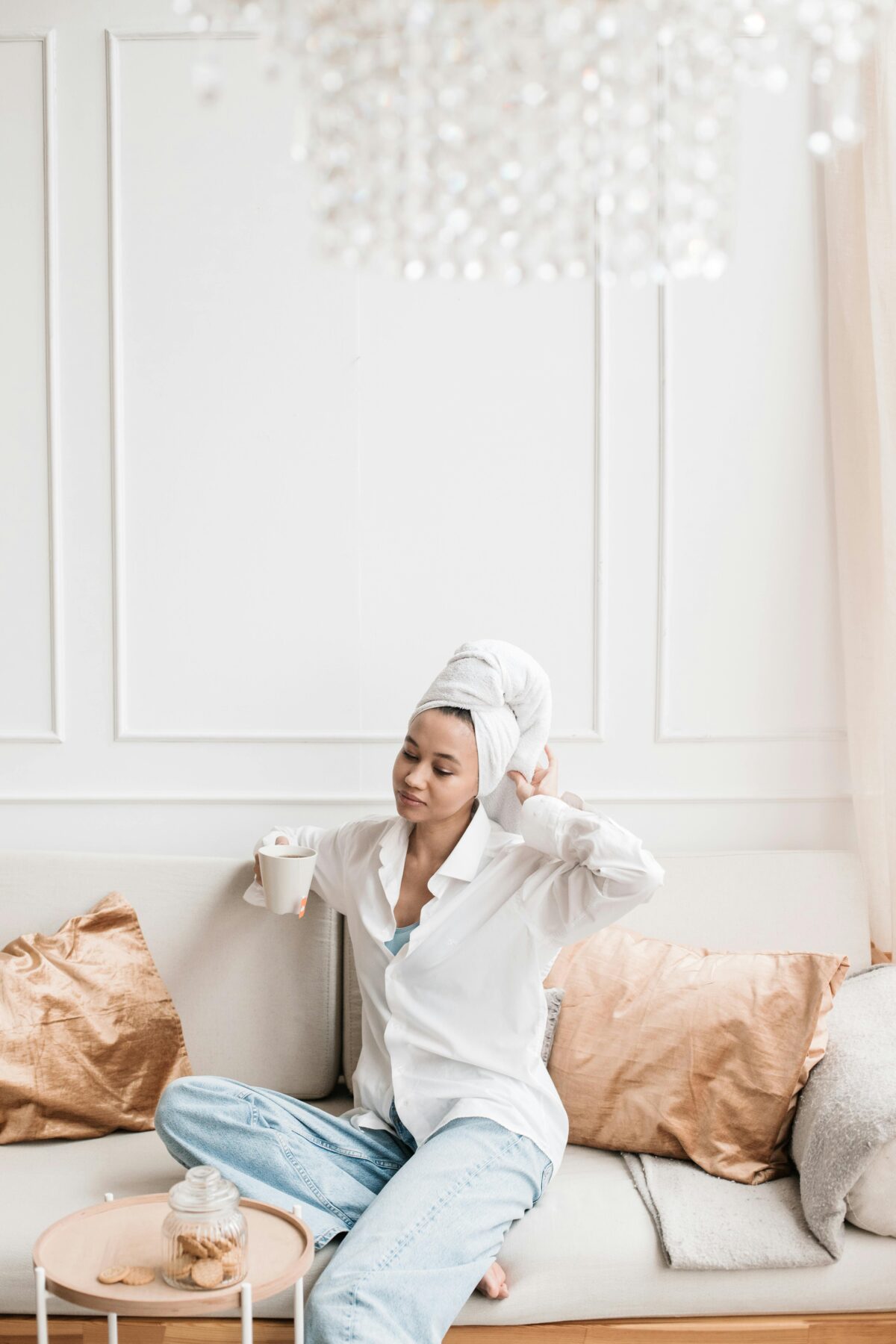
Healing people-pleasing is not about becoming selfish or indifferent to others. It’s about building a relationship with yourself that’s so grounded, so honest, that you can give from abundance instead of depletion. Here’s how to begin.
Step 1: Get honest about what you actually feel
Before you can advocate for yourself, you have to know yourself. Start by slowing down your automatic “yes.” When someone asks something of you, pause. Check in. What do you actually feel — not what you think you should feel, but what is true for you right now?
You don’t have to respond immediately. “Let me think about that” is a complete sentence. Use it.
Step 2: Understand that discomfort is not danger
People-pleasers often confuse someone else’s disappointment with a crisis. When someone is unhappy with your answer, your nervous system might go into overdrive — reading it as a threat to the relationship, or to your safety.
But someone being disappointed does not mean you did something wrong. You are not responsible for managing other adults’ emotional reactions to your boundaries. You can care about someone and still say no. Both things are true.
Step 3: Practice small, honest moments first
You don’t have to transform overnight. Start with low-stakes situations: ordering what you actually want at a restaurant, expressing a genuine preference when asked, letting a text breathe before you respond.
These small moments build evidence that it’s safe to be honest. They retrain your nervous system, one authentic choice at a time.
Step 4: Separate kindness from compliance
One of the most powerful distinctions you can make on this journey is understanding that you can be a loving, generous, warm-hearted woman and still hold firm boundaries. Kindness is a quality of the heart. Compliance is a behavior driven by fear. They are not the same thing.
You get to be kind and clear. You get to be loving and boundaried. Choose both.
Step 5: Build your self-trust muscle
People-pleasing erodes self-trust because when you consistently override your own needs to meet someone else’s, you send yourself a message: your instincts don’t matter. Rebuilding self-trust means following through on small promises you make to yourself. It means doing what you said you’d do — for you.
When you trust yourself, you need external validation less. That is where your freedom lives.
A Note on Boundaries — Especially for Black Women
There is a specific weight that many Black women and women of color carry when it comes to boundaries. The “Strong Black Woman” narrative — as beautiful and resilient as it sounds — has also been used to justify overworking, overlooking, and underserving us. We are praised for our strength, but rarely asked what it costs.
Setting boundaries as a Black woman is not aggression. It is not attitude. It is not “too much.” It is the quiet, courageous act of deciding that your humanity is not up for negotiation.
Your emotional energy is valuable. Your rest is necessary. Your “no” is legitimate. You do not need to earn the right to those truths — they were always already yours.
Boundaries are not walls you build to keep people out. They are doors with handles on the inside — you decide who enters and when.
Reflection Prompts to Begin Your Journey
Journal with these questions
- Where in my life am I saying yes when I mean no — and why?
- What am I afraid will happen if I disappoint this person?
- When did I first learn that my needs were less important than someone else’s comfort?
- What would I do differently this week if I trusted that I was worthy of my own honesty?
- What would I give myself permission to want if I stopped worrying about how it looks?
You Don’t Have to Earn Your Place in the Room
Stopping people-pleasing is not about becoming harder. It’s about becoming more honest — with yourself first, and then with the world. It’s about recognizing that your presence, your needs, and your perspective are not burdens to be apologized for. They are contributions. They are you.
This work is not linear. There will be moments when you slip back into old patterns — when keeping the peace feels easier than keeping your self-respect. Be patient with yourself in those moments. Notice them. Learn from them. Then come back to what you know: you deserve relationships and a life where you don’t have to disappear to belong.
You are allowed to take up space. You are allowed to have preferences, limits, and opinions. You are allowed to rest, to say no, to choose yourself — not instead of others, but alongside yourself.
That is not selfishness. That is wholeness. And wholeness is exactly what you were made for.
Ready to stop abandoning yourself?
If this article stirred something in you, that stirring matters. Life coaching with Lilian Shekinah is a space where you can do this work deeply — building self-trust, discernment, and the emotional intelligence to create a life that actually feels like yours. Explore Life Coaching with Lilian Shekinah.